
I often think about theoretical models as lenses that you pick up, which help particular patterns or objects come into focus. I had one of these strange moments where new things became visible after listening to the War on Cars episode on the lack of bike lanes in LEGO. Suddenly I began noticing how many children’s toys imagine a car-centric world.
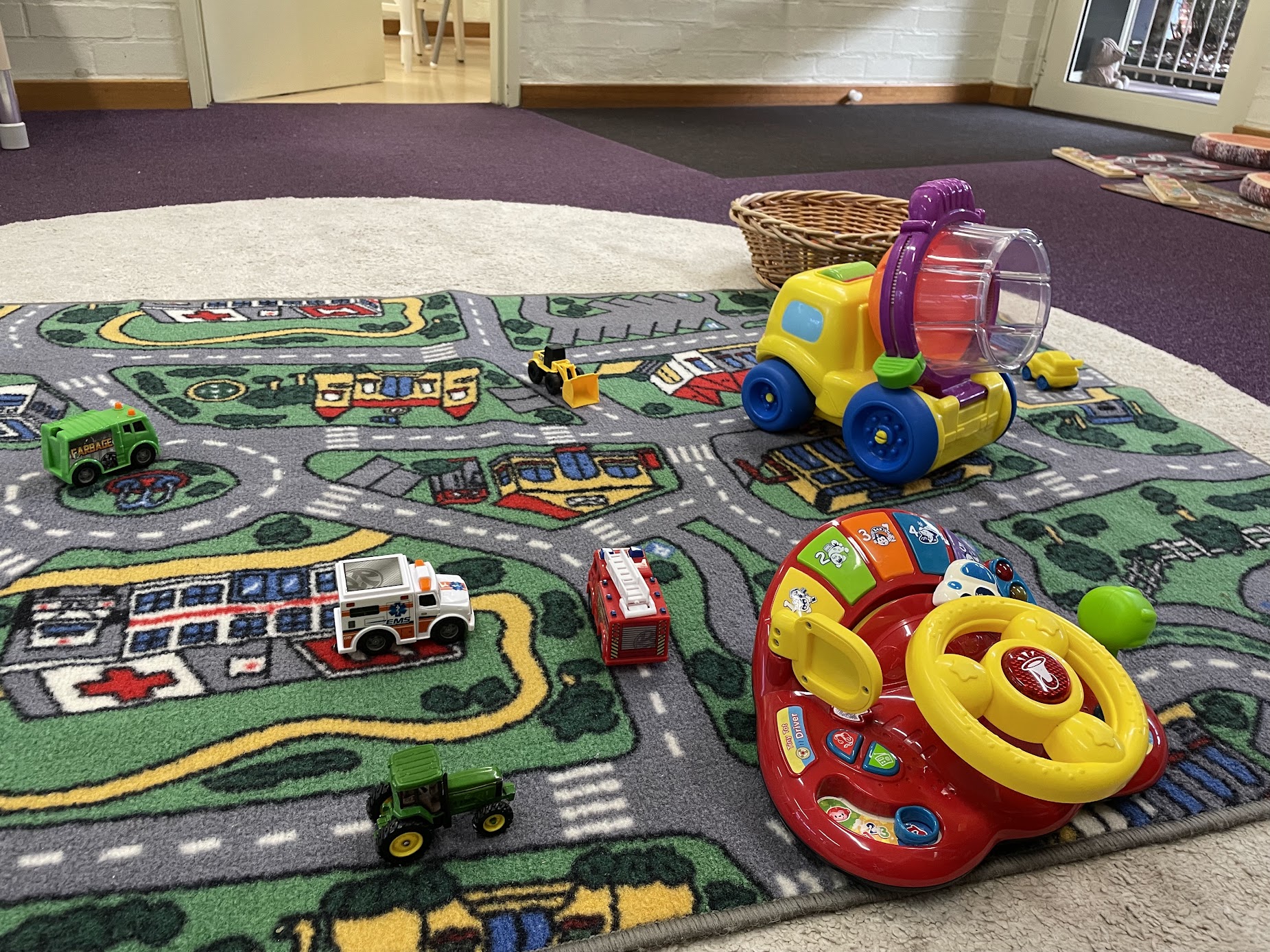
Some of this can be attributed to the design of cars, perhaps. A little toy four-wheeled car will stand up by itself in a way that a toy bicycle won’t. But…still…there seems to be a gap in our imaginations. The photo above is of the toys set out at my toddler’s daycare…trucks, cars, vans, a steering wheel, roads without bicycle lanes and very few pedestrian paths. The daycare is lovely, and there’s nothing unusual about these toys. It would take significant effort to create a playspace with wheeled vehicles that wasn’t car-centric, given what’s available.
I love that our daycare helps open space for new possibilities in so many ways. There are dress-up clothes, a play kitchen, and dolls, and as my older child went through daycare I saw children of all genders happily playing with all of these (as well as with toy trucks and cars and trikes and trolleys). We are increasingly finding ways to stretch our imaginations around gender roles, letting our children imagine the world for themselves and explore alternative futures.
Even though I don’t drive, I hadn’t noticed until recently how many children’s toys are centred on cars and driving…and how little space there is in many play set-ups to imagine a world of bicycles, pedestrians, wheelchairs, and other kinds of transport (apart from trains, which are happily well-represented)!
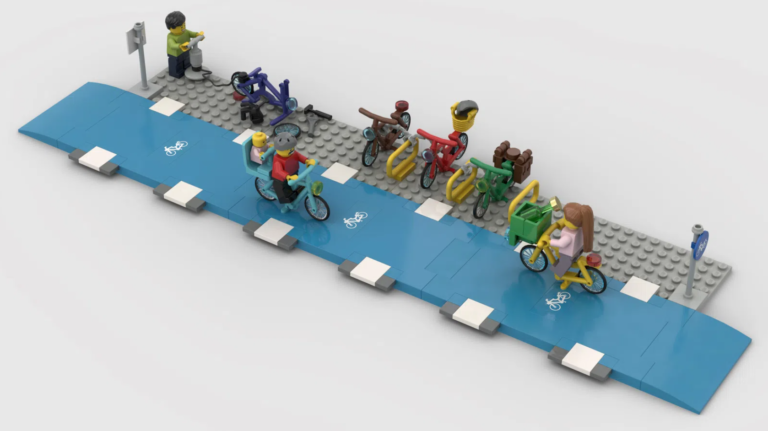
Now that I’ve noticed, I keep wondering how we can make more space for children – and perhaps for adults too! – to imagine different versions of our cities.
 leftover words